The Project
We know the position and seasonal shifts of the ITCZ at the present. But we don't know its behavior under climatically altered conditions. To test our theories, we need observational data series over the open ocean that reach farther back in time than are currently available. Our project therefore aims at reconstructing the historical Atlantic ITCZ to understand how it will change in a changing climate.
Our central hypothesis is that the Atlantic ITCZ at the end of the Little Ice Age can be reconstructed through the yet-to-be-uncovered traces in ship log data.
A first indication that supports our central hypothesis is found in this figure which indicates that ships travelling to the Caribbean largely avoided the doldrums.
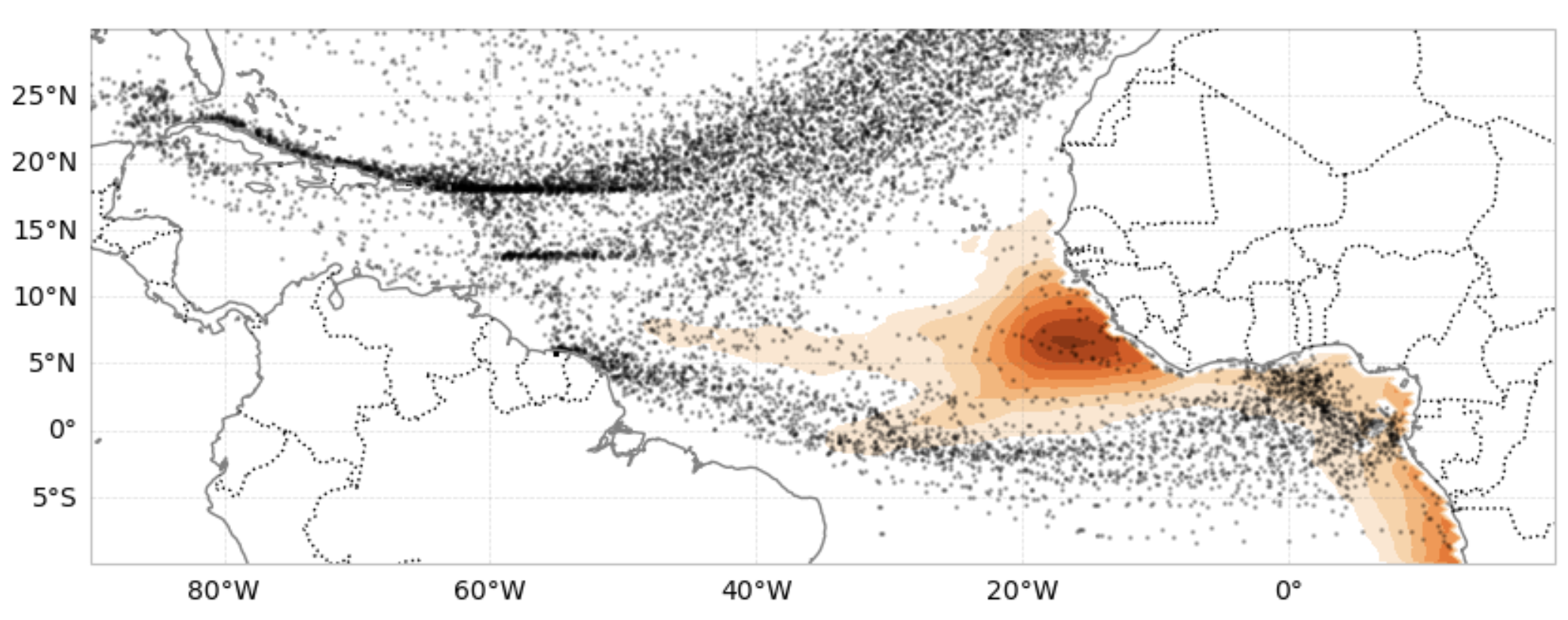
Figure: Sailing ships bound for the Caribbean compared with the occurrence of the doldrums. The black dots show the recorded locations of ships in the years between 1750 and 1850 in the CLIWOC database, the shaded areas show the frequency of hourly wind speeds below 3 m/s in one year of reanalysis data (ERA528), with the frequency increasing from 5% (light orange) to 50% (dark red). Credit: Julia Windmiller
Four further hypotheses follow the central hypothesis:

Historical ship logs encode the seasonal migration of the ITCZ (H1)
A very pronounced change in the ITCZ is its seasonal migration of about 15°following the peak in solar insolation, moving north during the Northern Hemisphere summer and south during the Southern Hemisphere summer. Testing our ability to detect the seasonal cycle in the logbooks tests the accuracy of our method.
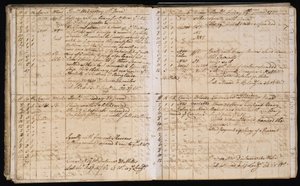
Ship logs encode ITCZ width and strength as well as location (H2)
Given the strong dependence of surface winds not only on ITCZ location, but also on width and strength, our hypothesis is that we can extract all these properties from ship log data. Testing this hypothesis requires solving an "inverse routing problem". The precision of our method depends on the relationship between surface winds and the various ITCZ properties.

Ship logs from the LIA encode a narrower and southward displaced ITCZ (H3)
We focus on the years 1783/1784 which are characterised by a strong hemispherically asymmetric cooling due to the Icelandic Laki eruption. The hypothesis to be tested is whether a corresponding southward shift of the ITCZ over the ocean, and an ITCZ narrowing due to cooling can be inferred from the ship logs.
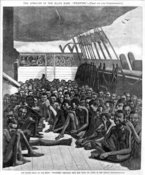

The slave trade was, in part, structured by the climatology of the winds. (H4)
We test the hypothesis that the ITCZ affected slave trade shipping routes by comparing the actual routes of slave ships with optimised routes according to surface wind fields. As the doldrums pose a threat to ships’ crews as well as enslaved humans, we hypothesize that reports of mutiny and/ or slave uprisings on board (also contained in ship logs) may be used as a proxy for encountering mentions of the doldrums and their locations.